


Page 94 - CFJ_Apr26
P. 94
SECTOR FOCUS FLOORING IN HEALTHCARE
wheels. This emerging understanding isolation rooms, and treatment bays,
underscores the importance of choosing this additional layer of protection can
flooring materials that actively support be crucial. By choosing flooring with
infection control protocols. integrated antimicrobial properties,
More than a cleaning protocol NHS facilities can further reduce the
Effective IPC starts with the materials risk of healthcare-associated infections
chosen during specification. In clinical (HCAIs).
environments, from general wards to Durability and daily demands
theatres, floorcoverings play a pivotal Healthcare flooring must withstand
role in supporting hygiene, safety, and constant foot traffic, heavy rolling loads,
ease of maintenance. and frequent exposure to harsh cleaning
A properly specified flooring system agents. Materials such as resilient sheet
can help minimise the spread of germs flooring are designed to cope with these
and bacteria, simplify ongoing cleaning, daily demands, offering both strength
Chris Pursey elaborates on and contribute to a calming, clinically
supporting infection prevention and appropriate atmosphere for patients and and cleanability.
Importantly for IPC teams, these
control through the ‘right’ fl ooring staff. floors are also resistant to chemicals
specifi cation Seamless transitions closing the gaps and stains, including those found in
Corners and transitions are often commonly used disinfectants and
HOW SMART weak points in healthcare interiors, sanitisers. Their ability to endure
repeated cleaning without degrading
creating areas that are notoriously hard
FLOORING CHOICES to clean and prone to deterioration. helps maintain hygiene standards while
STRENGTHEN Dirt and moisture can accumulate in reducing maintenance costs over time.
these spaces, increasing the risk of
Flooring that performs where it
INFECTION CONTROL contamination. matters
For this reason, NHS specifiers are
The clinical environment places intense
IN HEALTHCARE increasingly opting for integrated wall demands on materials, from burns
SETTINGS and floor systems with self-coved units and pharmacies to general wards
skirtings and clean corner solutions.
and outpatient departments. Flooring
Seamless, non-porous flooring, such must not only meet infection control
as sheet vinyl or linoleum can be heat standards but also remain intact,
N today’s complex healthcare welded at the seams, producing a
Ienvironment, NHS specifiers benefit continuous surface that eliminates gaps impermeable, and easy to clean across
from partnering with trusted suppliers where pathogens might thrive. These its lifespan.
Key features NHS specifiers should
who supply compliant, fit-for-purpose materials can also be coved up the wall look for include:
products, alongside deep expertise and to create a smooth, rounded transition • Non-porous surfaces to prevent the
ongoing support. This collaboration that’s easy to clean and resistant to absorption of liquids and pathogens
ensures confidence and long term-value wear. • Seamless installation for a continuous,
for healthcare stakeholders. Supporting clean air as well as clean hygienic finish
In infection-sensitive environments surfaces • Chemical and stain resistance to
like hospitals and other healthcare While much IPC guidance focuses on withstand regular cleaning
facilities, the correct flooring surface hygiene, airborne contaminants • Slip resistance for improved safety
specification can make a significant also pose a threat in healthcare underfoot
contribution to any infection prevention environments. Some flooring materials, Adapting to the evolving healthcare
and control (IPC) strategy. such as high-quality vinyl and rubber, landscape
While floors have traditionally contribute to better indoor air quality Post-Covid-19, IPC has become an
been overlooked in the context by minimising dust and allergen even greater focus across the NHS. It’s
of environmental contamination, accumulation. Their smooth, dense essential infection prevention extends
particularly compared to high-touch surfaces reduce particle build-up, which beyond protocol and practice to include
surfaces, evidence now suggests they supports overall cleanliness when paired material choice. Specifying the right
may play a far greater role in the spread with appropriate ventilation systems. flooring is one of the most practical
of pathogens than once thought. Built-in antimicrobial protection and proactive decisions that specifiers
Studies have shown that floors can Many modern commercial flooring and estates teams can make to protect
act as a reservoir for microorganisms, solutions are now manufactured with patients, staff, and visitors.
with pathogens potentially transferred antimicrobial additives that inhibit www.gerflor.co.uk
from floor to surface through air the growth of bacteria and fungi. In Chris Pursey is Gerflor healthcare key
movement, staff footwear, or equipment high-risk areas like operating theatres, account manager
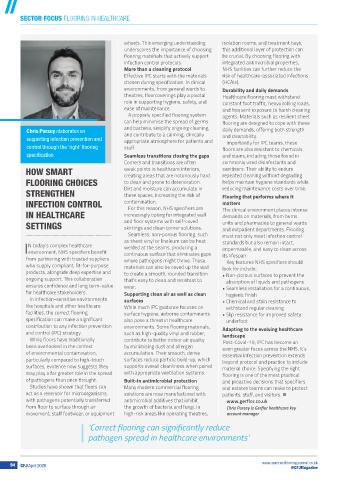
‘Correct flooring can significantly reduce
pathogen spread in healthcare environments’
94 CFJ April 2026 www.contractflooringjournal.co.uk
@CFJMagazine

